

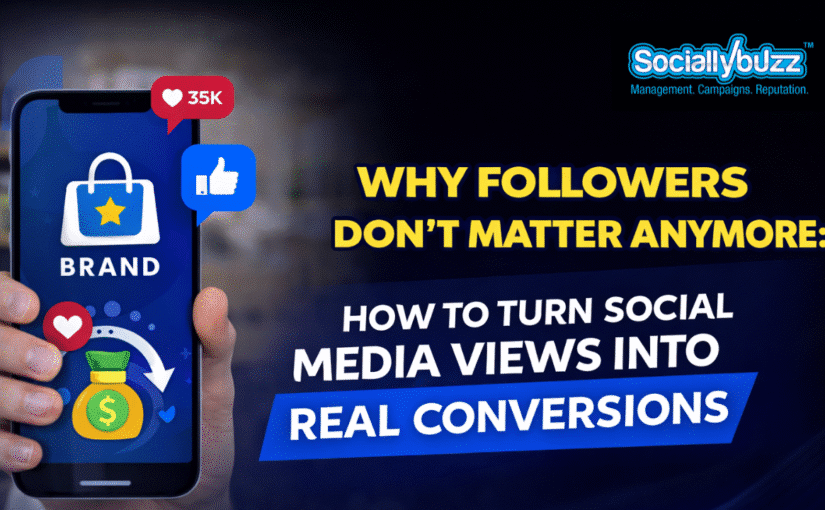
For years, social media success was measured by one number: followers.
Brands invested heavily in growing their audience because visibility depended largely on who followed you. The more followers you had, the more people saw your content.
LISTEN TO THE LIVE PODCAST BELOW
That model no longer defines how social platforms operate.
Today’s algorithms are interest-based. Content is distributed according to behavior signals such as watch time, comments, saves, shares, and direct message activity. What appears in a user’s feed is determined less by who they follow and more by what they engage with.
If you scroll through your own feed, you will likely notice something revealing. A large portion of the content shown to you comes from profiles you do not follow. The platform is prioritizing relevance and interaction over loyalty to connections.
This shift has fundamentally changed the rules of growth.
It is now entirely possible for an account with 1,000 followers to generate one million views.
But visibility is no longer the competitive advantage.
Conversion is.
Platforms like Instagram, TikTok, Facebook, and even LinkedIn have transitioned toward algorithms that reward engagement depth rather than audience size. Content that holds attention and sparks interaction is pushed further, regardless of how many followers the creator has.
This means smaller accounts can outperform larger ones if their content drives stronger behavioral signals. High follower counts no longer guarantee reach. Engagement quality determines distribution.
While this democratizes visibility, it also introduces a new challenge. Reaching people has become easier. Converting them has not.
The ability to generate attention is now accessible to many. The ability to turn that attention into measurable business results is where the real separation occurs.
Many brands experience the same cycle. A Reel gains unexpected traction and engagement increases dramatically. Views climb into the tens or hundreds of thousands. Comments multiply. The brand experiences a brief surge in attention.
Yet when revenue is reviewed, little changes.
Traffic might rise temporarily. Profile visits increase. But bookings, purchases, and inquiries remain relatively stable.
This disconnect often leads to confusion. If engagement is strong, why are sales not following?
The answer lies in structure.
Social media visibility creates opportunity, but without a defined conversion path, viewers simply consume content and continue scrolling. The algorithm rewards performance in the feed, not outcomes beyond it.
If there is no intentional bridge from attention to action, momentum dissipates.
Modern social media marketing is no longer just about attracting views. It is about activating intent.
When someone comments on a post, watches a video fully, or interacts with content repeatedly, they are signaling interest. That interest must be captured before it fades.
This is where conversation becomes critical.
Instead of relying solely on link-in-bio strategies, brands can move engagement into direct messages. Tools such as ManyChat allow businesses to automatically trigger a direct message when a user comments a specific keyword or engages with a post.
That single shift transforms passive engagement into active interaction.
Inside a direct message, a brand can provide product links, booking information, lead magnets, or personalized offers. Questions can be answered. Objections can be addressed. The interaction becomes relational rather than transactional.
Conversation increases commitment.
Commitment increases conversion.
The psychological difference between scrolling and conversing is significant.
In the feed, users are in browsing mode. Attention is fragmented. Content is consumed quickly. Even strong interest may not lead to immediate action because distractions are constant.
Direct messages create a different environment. They feel private and focused. When someone replies to a message, they are investing effort. That small act of participation increases psychological ownership of the interaction.
Instead of hoping a viewer clicks a bio link later, automation tools allow brands to guide the viewer immediately toward the next step.
This reduces friction and shortens the buying cycle.
The algorithm may deliver the visibility, but structured DM engagement delivers the conversion.
In the previous era of social media, follower count acted as a proxy for influence. Today, it functions more as a vanity metric than a performance indicator.
An account with 100,000 disengaged followers may struggle to reach even 10 percent of its audience. Meanwhile, an account with 1,000 highly engaged followers can achieve disproportionate reach through algorithmic amplification.
What matters now is how content performs within the ecosystem.
Does it hold attention?
Does it generate interaction?
Does it trigger conversation?
Does it move someone toward action?
These questions define modern social media strategy.
The brands winning today are not simply producing content. They are building systems that transform engagement into measurable outcomes.
The algorithm has made reach more accessible. The differentiator is what happens next.
To convert views into revenue, brands must think beyond posting frequency and creative formats. They must design a clear pathway from visibility to conversation, and from conversation to conversion.
That pathway may include automated direct messages, personalized follow-ups, structured call-to-actions, lead qualification sequences, and integration with booking or checkout systems.
Without infrastructure, engagement remains entertainment.
With infrastructure, engagement becomes a growth engine.
Social media is no longer about how many followers you have. It is about how effectively you activate the people who engage with you.
An account with 1,000 followers can generate one million views. But if those views are not directed toward structured conversations and intentional next steps, they will not translate into business growth.
The algorithm has changed.
The real question is whether your strategy has changed with it.
Visibility is now easier to earn.
Conversion is still earned intentionally.
Follower count can contribute to perceived credibility, but it no longer guarantees reach. Algorithms prioritize engagement signals such as watch time and interaction, which means performance matters more than audience size.
Yes. Interest-based algorithms allow content to be distributed beyond follower lists. If a smaller account creates content that drives strong engagement, it can outperform larger accounts with weaker interaction.
ManyChat is an automation tool that allows brands to trigger direct messages based on user engagement, such as commenting on a post. This moves interaction into private conversation, where offers, links, and booking information can be delivered more effectively.
Direct messages create a focused and personal environment. Instead of asking users to leave the platform and navigate multiple steps, brands can deliver information immediately within a conversation, reducing friction and increasing commitment.
Brands should track conversion-related metrics such as qualified leads, direct message responses, booked calls, purchases, and customer acquisition cost. Views indicate visibility. Conversions indicate effectiveness.
Sociallybuzz is a leading social media marketing, management, and digital advertising agency for small and medium-sized businesses. With over 17 years of experience as one of the first social media marketing agencies in the world, we know how to create and execute marketing campaigns that will help you grow your business. Our social media agency has created successful targeted social media campaigns that acquired our customers more leads, sales, and revenue.
Check out our insights on The Impacts of Social Media Marketing in the Restaurant Industry to see how specific strategies can influence different sectors.
Recommended: Restaurant advertising ideas and tips for food firms
Recommended: Learn How to Create Your Restaurants Social Media Marketing Strategy
Recommended: How to Run Facebook Ads for Restaurants
Read More:







Subscribe now to receive relevant social media information, tips, tricks and service updates.