

Many businesses invest in lead generation but struggle to turn that attention into actual revenue. Website visitors subscribe to a list, download a free resource, or sign up for a webinar, yet many of those leads never convert into paying customers. The problem is often not the offer itself. It is the lack of a strategic follow-up system.
This is where an email nurture sequence becomes essential.
An email nurture sequence is not just a series of automated emails sent after someone joins your list. When built correctly, it becomes a structured sales journey that helps potential customers move from awareness to trust, and from trust to action. It allows businesses to stay relevant, provide value, and guide subscribers toward a purchase without relying on constant manual follow-up.
If your goal is to drive more sales through email marketing, your nurture sequence needs to do more than simply “check in.” It needs to welcome, educate, and convert.
LISTEN TO THE LIVE PODCAST BELOW
An email nurture sequence is a pre-written series of automated emails designed to guide a subscriber toward a specific business goal. That goal might be booking a call, purchasing a product, registering for an event, or taking the next step in a service-based sales process.
Unlike one-off promotional emails, a nurture sequence is intentional. Each message serves a purpose. One email may introduce the brand and set expectations. Another may educate the reader about a common problem. Another may answer objections or introduce an offer at the right time.
This is what makes email automation so powerful. Instead of sending random messages to your list, you create a customer journey that works in the background and supports your sales process consistently.
Most people do not buy the first time they hear about a brand. They need time to understand the problem, evaluate the solution, and decide whether they trust the business enough to move forward.
An email nurture sequence helps close that gap.
It keeps your brand in front of the subscriber after the initial opt-in. It creates repeated touchpoints. It builds familiarity. It gives you the opportunity to show expertise, address hesitation, and position your offer in a way that feels natural instead of forced.
Without a nurture sequence, leads often go cold simply because no one followed up in a meaningful way. With one, your business continues the conversation long after a website visit or signup form submission.
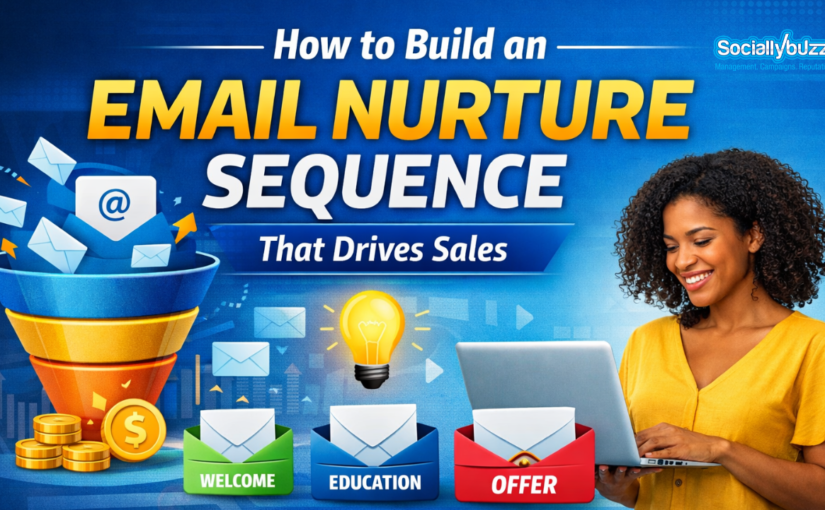
A high-converting email nurture sequence typically includes three core stages: welcome emails, education emails, and offer emails. While the sequence can be customized depending on the business model, these three categories form the foundation of an automated email strategy that drives sales.
Each one plays a different role in the buyer journey.
The welcome email is the first message a subscriber receives after joining your list. This email matters because it creates the first impression after the opt-in. It confirms that the signup worked, but more importantly, it sets the tone for the relationship moving forward.
Many businesses waste this opportunity by sending a cold, transactional message such as, “Thanks for subscribing. Here is your free download.” While functional, that type of email does very little to create connection or build momentum.
A stronger welcome email should do more. It should acknowledge why the subscriber signed up, reinforce the value they can expect, and introduce what happens next.
For example, if someone signs up for a guide about improving their email marketing, a more strategic welcome email might open by speaking directly to their situation. It could acknowledge that many businesses collect leads but struggle to turn them into customers, then explain that over the next few emails, the subscriber will learn how to create an email system that builds trust and increases sales.
That approach immediately creates relevance. It makes the subscriber feel understood and gives them a reason to keep opening future emails.
A welcome sequence can also go beyond one email. In many cases, businesses benefit from a short two- or three-part welcome flow. The first email delivers the promised resource or confirms the signup. The second email introduces the brand story, point of view, or mission. The third email may highlight the problem the business helps solve and begin transitioning into educational content.
For instance, a service provider might structure the welcome phase like this:
The first email confirms the signup and explains what the subscriber will receive in the coming days. The second email shares why the company believes most marketing systems fail because they focus too much on visibility and not enough on conversion. The third email introduces a simple framework or insight that prepares the subscriber for the deeper educational content ahead.
This sequence creates continuity instead of treating the welcome email as a standalone message.
Education emails are where the real nurturing begins. These emails are designed to help the subscriber understand their problem more clearly, shift how they think about the solution, and view your brand as a credible guide.
This does not mean sending generic tips that could be found anywhere online. Effective education emails are strategic. They should make the reader think differently, uncover mistakes they may not realize they are making, and guide them toward the conclusion that your offer is the logical next step.
There are several types of education emails that work especially well in a nurture sequence.
One type is the insight email. This email introduces a valuable idea that helps the reader see the problem from a new angle. For example, if you are speaking to business owners, you might send an email explaining that email marketing does not fail because people dislike email. It fails because most businesses send disconnected messages without a customer journey behind them.
Another strong format is the myth-busting email. This type of message challenges a common belief your audience may have. For example, an ecommerce brand might send an email explaining that discounting is not always the fastest way to increase conversions. Often, the real issue is that the customer was never nurtured enough to understand the product’s value.
A process email is also highly effective. These emails walk the reader through how something works, step by step, in a way that builds clarity and confidence. A marketing agency, for example, might send an email explaining the difference between a welcome email, a cart abandonment email, and a post-purchase email, then show how each one supports a different stage of the customer journey.
Story-based education emails can be especially persuasive as well. These emails use a client story, customer scenario, or real-world example to make the lesson more relatable. Instead of simply stating that nurturing matters, you might explain how a business had strong traffic but low conversions, then increased sales after implementing an automated email sequence that educated leads before making an offer.
The purpose of education emails is not just to inform. It is to prepare the subscriber to buy.
When done correctly, these emails reduce resistance because the reader begins connecting the dots on their own. They start to understand not just that they have a problem, but why it has remained unsolved and what kind of solution is required.
Once the subscriber has been welcomed and educated, the next step is to introduce the offer. This is where many businesses either become too aggressive too soon or wait too long and lose momentum.
Offer emails should feel like a natural continuation of the conversation, not a sudden sales pitch.
The best offer emails connect the pain points and insights from the earlier emails to a clear solution. Rather than simply saying, “Buy now,” they explain why the offer exists, who it is for, and what outcome it helps create.
For example, if the previous education emails discussed why disconnected email marketing leads to inconsistent sales, the offer email might introduce a done-for-you email automation service. It could explain that the service helps businesses create a complete nurture sequence that welcomes leads, builds trust, and moves them toward purchase automatically.
A strong offer email should answer four questions clearly. What is the offer? Who is it for? What problem does it solve? What should the reader do next?
It is also important to understand that offer emails often work best as a sequence, not a single message.
The first offer email may introduce the offer and explain the transformation. The next email may handle objections by addressing common concerns such as timing, budget, or whether the offer is the right fit. A later email may create urgency by highlighting a deadline, limited availability, or the cost of staying stuck.
For example, a business coach selling a strategy session might use this progression:
The first offer email introduces the strategy session as a focused way to identify where leads are dropping off in the sales process. The second email addresses hesitation by explaining who the session is best suited for and what happens during the call. The third email reminds the subscriber that booking closes soon and reinforces the value of solving the problem now instead of delaying further.
This kind of offer sequence is far more effective than dropping one promotional email into the middle of an otherwise educational flow.
To understand how these pieces work together, it helps to look at a practical sequence structure.
A simple seven-email nurture sequence might look like this:
The first email is the welcome email. It delivers the promised resource, confirms the signup, and sets expectations for what is coming next.
The second email introduces a key insight. It helps the reader understand a core problem or mistake that may be limiting results.
The third email expands on that idea with educational content. This could be a framework, process breakdown, or practical explanation that gives the reader more clarity.
The fourth email uses a story or case study to show how the problem plays out in the real world and what changed after the right system was put in place.
The fifth email introduces the offer. It presents the solution as the logical next step based on everything the subscriber has learned so far.
The sixth email handles objections. It answers common questions, clears up hesitation, and helps the subscriber evaluate whether the offer is the right fit.
The seventh email adds urgency and encourages action. It may remind the subscriber that a deadline is approaching, spots are limited, or the opportunity to move forward is closing.
This kind of sequence works because it mirrors how people make buying decisions. They rarely go from stranger to buyer in one step. They need context, trust, and a reason to act.
One of the biggest advantages of an email nurture sequence is that it can be automated. Once the sequence is written and built inside an email marketing platform, every new lead can move through the same strategic journey automatically.
This creates consistency across your marketing. Every subscriber receives the right message at the right stage. No lead is forgotten. No manual follow-up is required every time someone joins your list.
Automation also allows businesses to scale without losing structure. A small team can nurture hundreds or even thousands of leads with the same intentional experience they would want to provide one-on-one.
Popular platforms such as ConvertKit, ActiveCampaign, and Klaviyo make it possible to build these sequences based on actions and triggers. A subscriber can enter the workflow after downloading a lead magnet, filling out a form, signing up for a webinar, or making a purchase. From there, the sequence can guide them toward the next best step.
Even though email nurture sequences are powerful, many businesses still struggle to get results because the structure is weak or the messaging is misaligned.
One common mistake is sending emails that feel disconnected from one another. If each message sounds like it belongs to a different strategy, the subscriber never experiences a clear journey.
Another mistake is teaching without leading. Educational content is valuable, but if it never points toward a solution, it may inform the subscriber without moving them closer to a purchase.
Some businesses also introduce the offer too early, before trust has been established. Others wait too long and continue educating without creating a clear opportunity to act.
There is also the issue of writing emails that sound overly corporate or generic. People respond better to email marketing when it feels relevant, clear, and grounded in real customer problems.
The sequence needs structure, but it also needs momentum.
A nurture sequence should ultimately be measured by its ability to support revenue. Open rates and click-through rates matter, but they are not the full picture.
The most important question is whether the sequence is leading subscribers toward meaningful action.
That may include booking consultations, making purchases, requesting proposals, or moving deeper into your funnel. If subscribers are opening emails but not converting, the issue may be that the sequence is not building enough trust, not addressing the right pain points, or not presenting the offer clearly enough.
Reviewing subscriber behavior can help identify where the sequence is losing momentum. If readers stop engaging after the first email, the content may not be compelling enough. If they engage with education emails but ignore the offer, the transition to the sales message may be too abrupt or too weak.
Optimization is part of the process, but the structure must come first.
A high-converting email nurture sequence does not rely on random follow-up or one-off promotions. It is built with intention. It welcomes the subscriber, educates them strategically, and presents an offer at the right time.
When these elements work together, email automation becomes more than a convenience. It becomes a sales system.
Businesses that want to drive more revenue from their email marketing need more than newsletters and occasional promotions. They need a sequence that guides subscribers through a clear journey from first interest to final decision.
That is what makes a nurture sequence so valuable. It helps turn attention into trust, and trust into sales.
The main types of emails in a nurture sequence are welcome emails, education emails, and offer emails. Welcome emails introduce the relationship, education emails build trust and authority, and offer emails guide the subscriber toward taking action.
A typical email nurture sequence includes between five and ten emails, depending on the complexity of the offer and the length of the sales cycle. Shorter sequences may work for lower-ticket offers, while higher-ticket services often require more education and trust-building.
A welcome email confirms the subscriber’s signup, delivers any promised resource, and sets expectations for future communication. It also creates the first impression of your brand and begins building trust.
Education emails help subscribers understand their problem more clearly and position your business as a credible authority. They increase buyer readiness by building trust before introducing a sales offer.
An offer should usually be introduced after the subscriber has received enough value and context to understand why the solution matters. In most nurture sequences, this happens after one or more welcome and education emails.
Subscribe now to receive relevant social media information, tips, tricks and service updates.